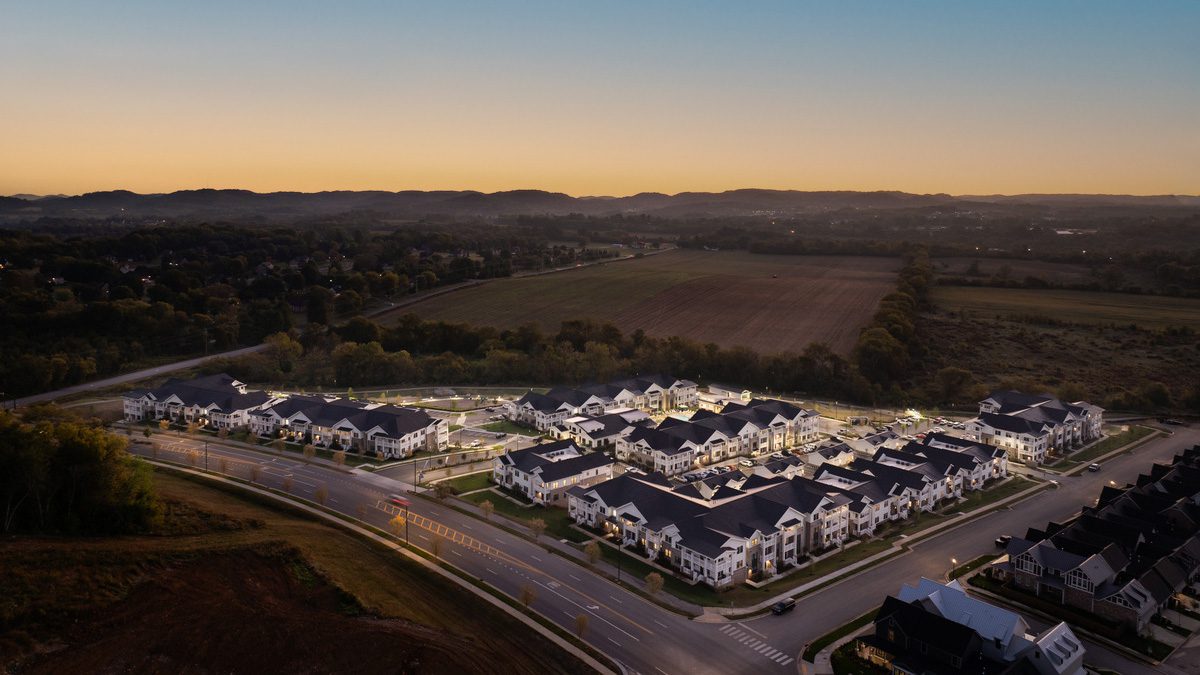

Mixed-Use vs. Multifamily Developments: Which Creates More Long-Term Value?
When evaluating development opportunities in a growing market like Nashville, one of the most consequential decisions an investor or developer faces is choosing between mixed-use and multifamily projects. Both property types have demonstrated staying power in urban markets, and both carry distinct risk and reward profiles. Understanding the differences, and knowing which aligns with your goals and market conditions, can mean the difference between a good investment and a transformative one.
Defining the Two Development Types
Multifamily development focuses exclusively on residential units, whether that means apartment complexes, condominium buildings, or townhome communities. These projects are straightforward in their purpose: provide housing and generate rental income. Their operational model is relatively streamlined, which makes them appealing to investors who value predictability.
Mixed-use development, by contrast, layers residential, commercial, and sometimes civic or cultural uses within a single project or district. A mixed-use building might include ground-floor retail or restaurant space beneath several floors of apartments or office tenants. This complexity introduces more variables, but it also creates opportunities that a single-use development simply cannot match.
The Case for Multifamily
Multifamily properties have long been regarded as a reliable asset class. Demand for housing remains consistent across economic cycles, and in high-growth metros like Nashville, that demand has remained especially strong. For Nashville commercial real estate developers, multifamily projects offer a clear path to stable, recurring income with a well-understood tenant base.
Management is also more uniform in multifamily settings. Leases tend to follow predictable patterns, maintenance needs are relatively consistent across units, and the asset class benefits from a deep pool of operational expertise. For developers looking to deploy capital efficiently with manageable complexity, multifamily is a compelling choice.
The Case for Mixed-Use
Mixed-use development offers something multifamily alone cannot: the ability to shape a neighborhood’s identity. When retail, dining, office, and residential uses coexist in a thoughtfully designed project, the result is a place where people want to live, work, and gather. This kind of vibrancy is not just aesthetically valuable; it translates into stronger long-term demand and, often, premium rents across all uses.
From a risk management perspective, mixed-use projects also benefit from diversified income streams. If one sector faces headwinds, other components of the project can help stabilize overall performance. That said, mixed-use development requires a higher level of coordination across leasing, property management, and tenant relations. The complexity is real, and it rewards developers who bring integrated expertise to the table.
In Middle Tennessee, mixed-use projects have played a meaningful role in reshaping urban corridors and creating walkable, connected communities. For developers committed to long-term community impact, these projects offer a way to contribute to the urban fabric in ways that extend well beyond a single building’s balance sheet.
Which Creates More Long-Term Value?
The honest answer is that it depends on the site, the market, and the development team’s capabilities. Multifamily projects tend to deliver more predictable returns with lower operational complexity. Mixed-use projects have the potential to generate greater long-term value, both financially and in terms of community impact, but they require deeper expertise and more sophisticated management to realize that potential.
Location matters enormously. A multifamily project in a high-demand corridor can outperform a mixed-use project in a market that isn’t ready to support retail or office tenants. Conversely, a mixed-use development in an emerging urban neighborhood can catalyze growth in ways that lift property values for an entire district.
The strength of the development and management team is equally important. Working with a commercial real estate brokerage in Nashville that understands local market dynamics, and pairing that with experienced commercial property management in Nashville, gives any project, multifamily or mixed-use, a significant advantage.
An Integrated Approach Makes the Difference
At Southeast Venture, the belief that building value starts with valuing relationships shapes every project the firm undertakes. That philosophy applies directly to this conversation. Choosing between mixed-use and multifamily is not just a financial modeling exercise; it is a decision that benefits from trusted advisors who understand your goals, know the market, and have the operational depth to support the project through every phase.
Southeast Venture’s integrated approach across Nashville commercial real estate developers, brokerage, and commercial property management in Nashville means clients have a single team that can evaluate development opportunities, execute leasing strategy, and manage assets for the long term. That continuity of expertise is rare, and it makes a meaningful difference in outcomes.
Ready to explore your next development opportunity in Nashville or Middle Tennessee? Connect with the Southeast Venture team to start a conversation about what kind of project makes the most sense for your goals. Contact us today.